
How to Choose a Vertical Machining Center: 6 Factors That Decide Your Takt Time
A practical selection guide for vertical machining centers: using takt time, travel, spindle capability, tool changing, rigidity and automation to shortlist the right VMC for milling work.
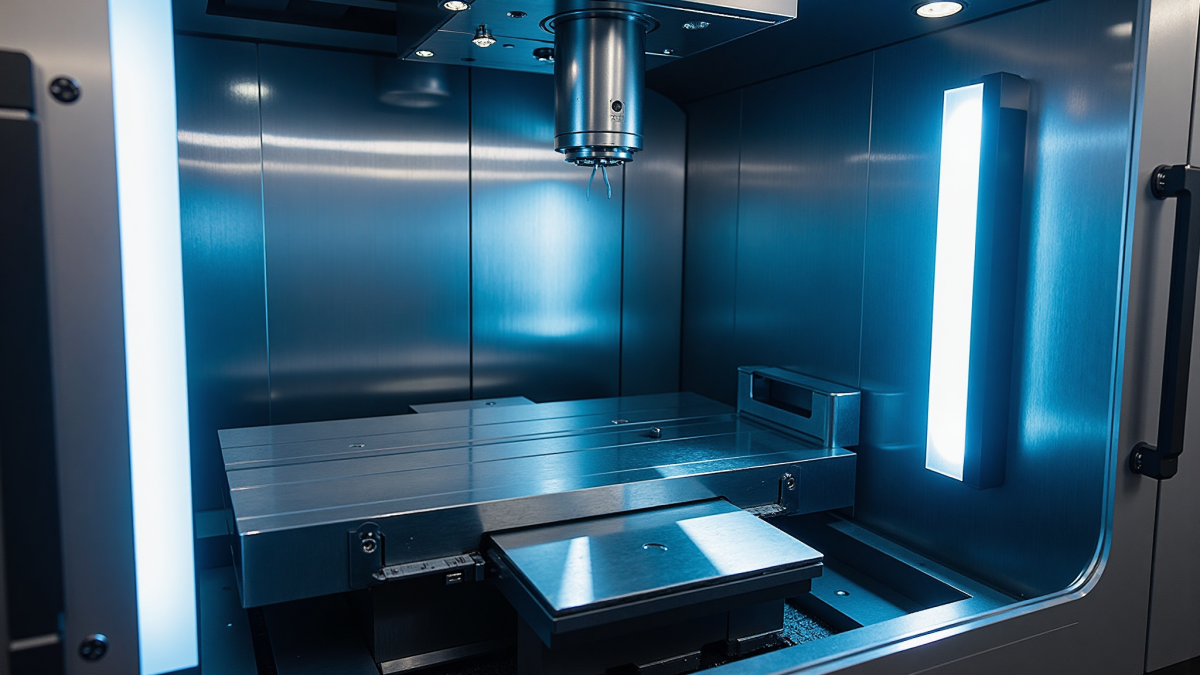
A vertical machining center (VMC) is the backbone of most milling floors, yet two machines with near-identical brochures can perform very differently once real parts are loaded. The gap usually shows up not on the specification sheet but in whether the machine can hold the takt time your program requires - the pace it must sustain to meet demand without overtime. The six factors below are the ones that most often decide that outcome. The figures quoted here are typical industry references for selection work, and the final configuration and quotation should always be confirmed against a specific enquiry.
1. Let Takt Time Define the Machine, Not the Other Way Around
Takt time is available production time divided by the quantity the customer needs in that window. If a shop runs sixteen productive hours a day and the plan calls for 120 parts a day, the takt time is eight minutes per part. Every non-cutting second - tool change, rapid traverse, load and unload - eats directly into that budget.
Break the cycle into cutting time, idle and traverse time, tool-change time and load/unload time before comparing machines. A VMC that is marginally faster at the spindle but slow through the tool changer can still lose the race. Put the takt time on the same sheet as the machine specifications and check that the sum of the cycle elements fits inside it.
2. Travel and Workpiece Envelope
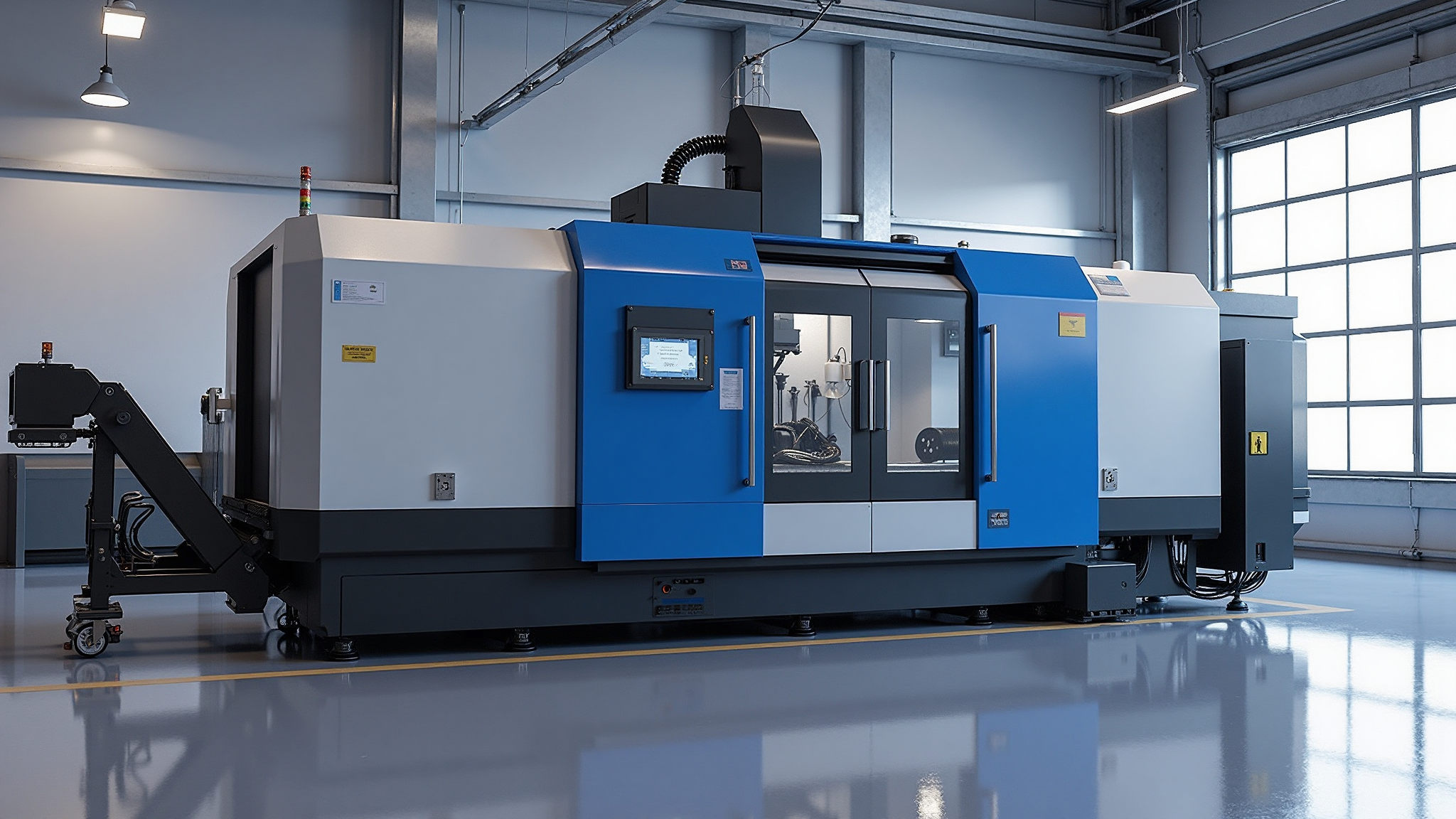
The X, Y and Z travel, table size and table load capacity set the physical limit of what the machine can hold. The envelope must accommodate the part plus its fixture, plus clearance for the longest tool in the program and for the spindle nose at full retract. It is not enough that the part fits at rest; the toolpath must fit in motion.
Envelope checkpoints
- Part footprint plus fixture base inside the table dimensions.
- Total part height plus clamp height below the maximum Z clearance.
- Swing room for the longest tool at full depth of cut.
- Rotary table or fourth-axis mass within the table load rating.
3. Spindle Speed and Torque
Spindle speed (rpm) and torque trade off against each other. High spindle speeds suit small-diameter tools in aluminium and light finishing passes, while low-speed torque suits large-diameter cutters and harder steels. Match the spindle to the dominant operation: a shop cutting mostly 10 mm end mills in aluminium will value rpm and fast acceleration, while a shop roughing 50 mm cutters in tool steel needs torque and a rigid taper interface.
Check the torque-speed curve rather than a single peak number. The usable band is where the machine can hold a reasonable chip load without stalling.
4. Tool Magazine and Chip-to-Chip Time
Tool capacity and chip-to-chip time determine how smoothly a multi-tool program runs. A part that needs twenty tools on a sixteen-station magazine forces manual intervention and breaks takt time. Chip-to-chip time, not just tool-to-tool time, is the honest metric because it includes the spindle stop, orient, change and restart sequence.
For high-mix work, favour a magazine with room to keep the common tool families pre-loaded so that a change of job does not require a full reload.
5. Rigidity, Thermal Stability and Accuracy
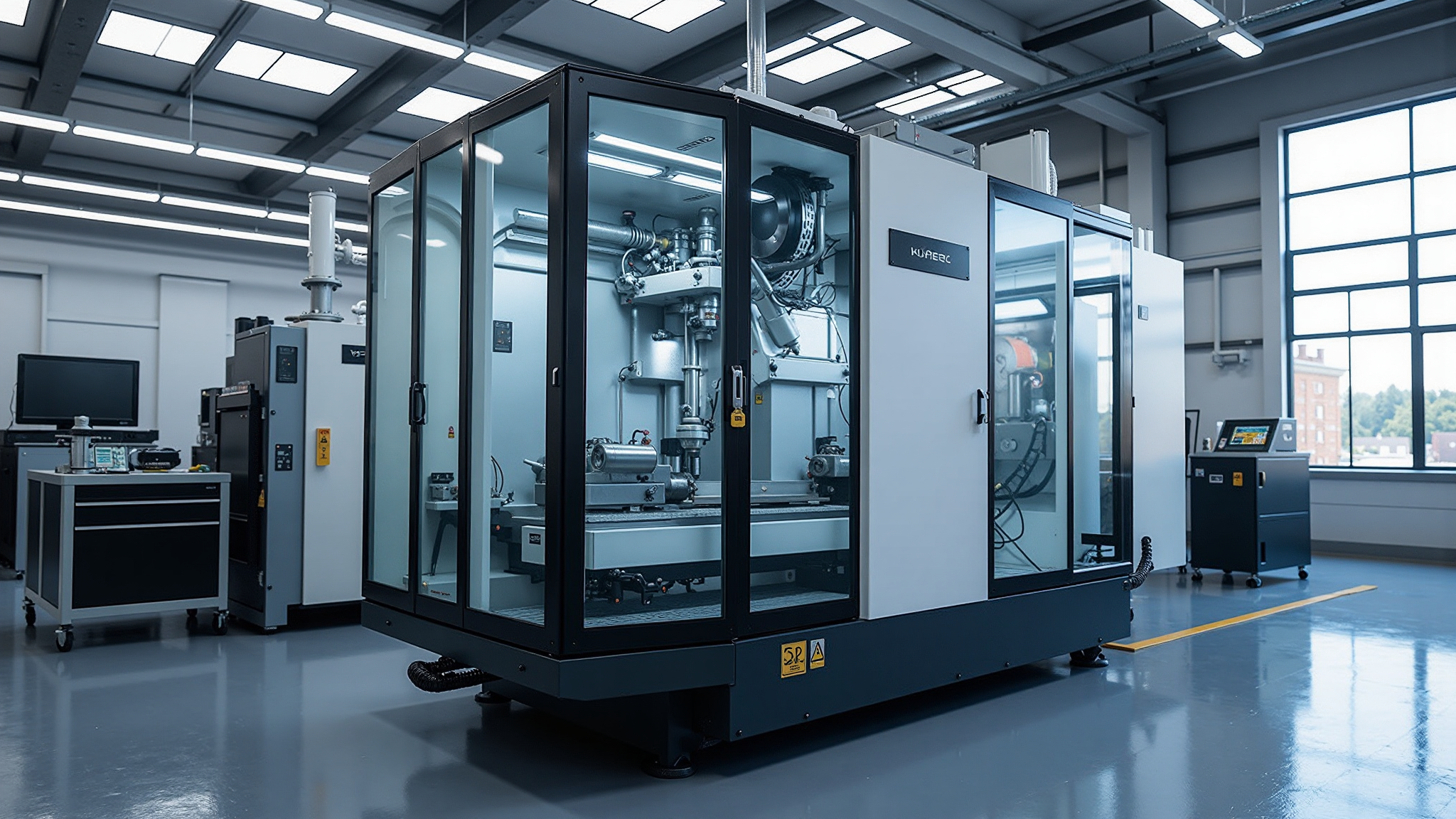
Rigidity comes from the structure - cast iron or polymer-concrete bases, box ways or linear guides, and the spindle bearing arrangement. A rigid machine cuts heavier and holds tolerance longer. Thermal stability matters on long shifts: heat grows the structure and moves the tool point, so look for spindle cooling and temperature compensation on precision work.
Compare positioning accuracy and repeatability figures, but treat them as references. The accuracy a machine holds under a real depth of cut is what matters, not the number measured on a warm idle machine.
6. Automation, Fixtures and the Human Interface
The last factor is often the cheapest to get right and the easiest to overlook. Quick-change fixture systems, pallet changers and probing reduce the idle time between parts. A control that the operators already know shortens the learning curve. For lights-out or unattended running, tool-life monitoring and chip management become selection criteria rather than extras.
| Factor | What to check | Typical reference |
|---|---|---|
| Takt time | Cycle budget per part | Set by demand |
| Travel | Part + fixture + tool clearance | Model dependent |
| Spindle | Torque-speed curve for dominant cut | 6,000-15,000 rpm class |
| Tool change | Chip-to-chip time, stations | 3-8 s class |
| Rigidity | Structure, guides, thermal control | Application dependent |
| Automation | Fixtures, pallets, probing | Optional package |
Choosing a VMC is a matching exercise: the machine should be neither starved nor overburdened by the work you intend to run. Score each candidate against the six factors above, weight them for your mix, and confirm the final configuration and quotation against a specific enquiry before committing.
Related Reading

Gantry vs Horizontal Machining Center: Machining Large Workpieces
How gantry and horizontal machining centers differ when machining large workpieces, covering size and weight, spindle orientation, chip evacuation, accuracy, throughput and the applications each suits.
Read More